한국
군사적, 정치적, 경제적, 사회적 상황, 언론검토, 민간정보, 기타 극동사령부 사령관 및 참모들을 위해 선정된 정보 제2402호 군사 정세
1. 제주도:
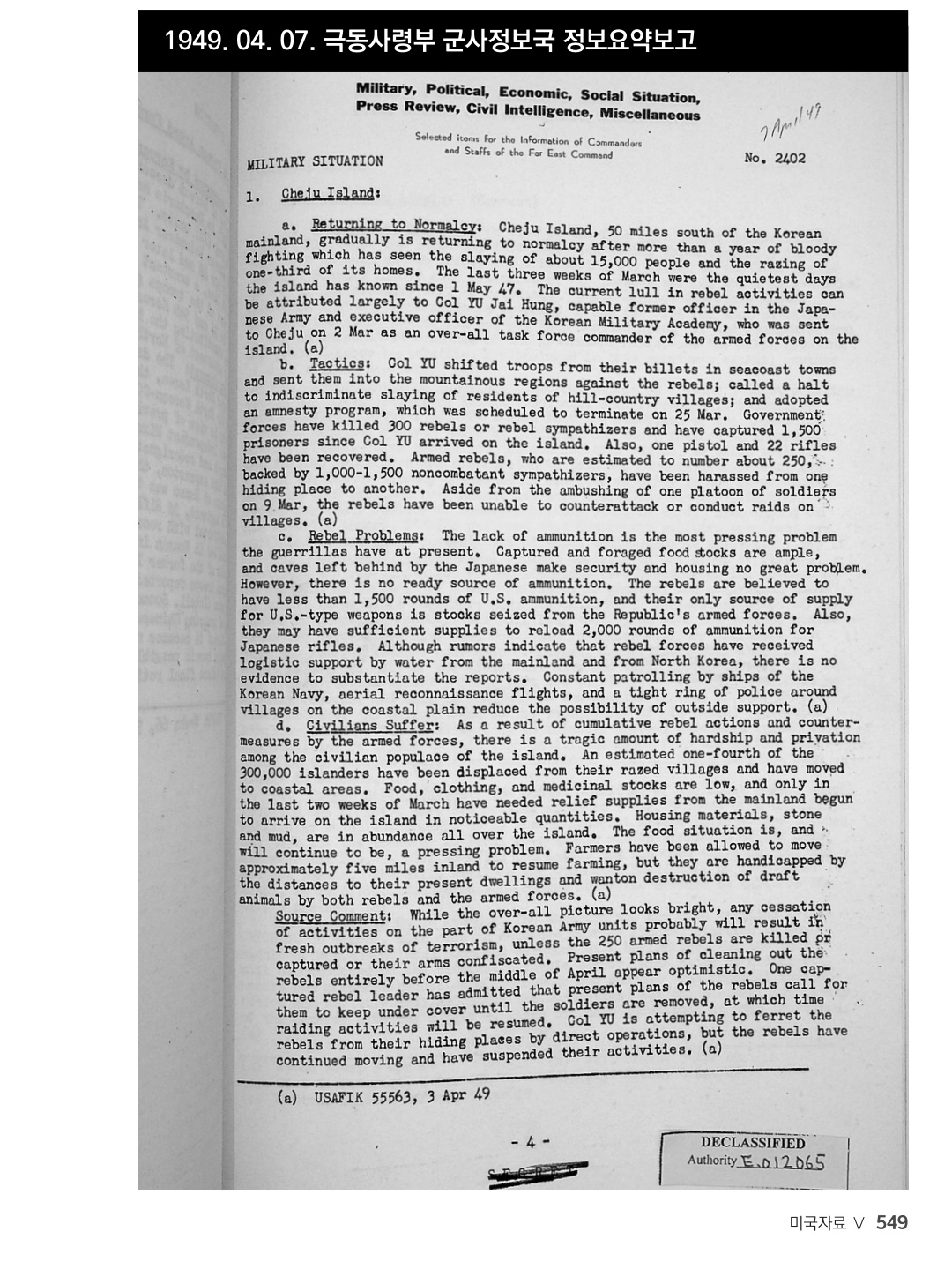
a. 정상 복귀: 한국 본토 남방 50마일에 위치한 제주도는 1만 5,000명이 살육 되고 가옥 1/3이 파괴된 1년 이상의 유혈 투쟁 이후 점차 정상으로 복귀하고 있 다. 3월의 지난 3주간은 1947년 3월 1일 이후에 그 섬에서 경험했던 가장 평온 한 나날이었다. 현재 폭도 활동이 소강상태에 들어간 것은 유능한 일본군 장교출 신이자 한국 육군사관학교 부교장인 유재흥 대령 덕분이라 할 수 있다. 유재흥 대 령은 3월 2일 제주도지구전투부대 사령관으로서 제주도에 파견됐다.1
b. 전술: 유재흥 대령은 해안마을에 있는 막사(숙사)로부터 부대들을 이동시켜 폭도에 맞서 싸우기 위해 그들을 산악지대로 보냈다. (유재흥 대령은) 오름 지역에 사는 마을 주민들에 대한 무차별적인 살육을 중지할 것을 요청했으며 3월 25 일에 종결되도록 예정된 사면계획을 채택했다. 유재흥 대령이 제주도에 부임한 이후 폭도 또는 폭도 동조자 300명이 사망했고 포로로 1,500명이 붙잡혔다. 또 한 권총 1정과 소총 22정을 회수됐다. 비전투원 동조자 1,000~1,500명으로부터 후원을 받는 약 250명으로 추산되는 무장 폭도들은 은거지에서 공격을 받아 다 른 곳으로 쫓겨났다. 3월 9일 경비대 1개 소대 병사들에 대한 매복을 제외하면, 폭도들은 반격을 가하거나 마을에 대한 습격을 감행할 수 없었다.2
c. 폭도 문제: 탄약의 부족은 게릴라들이 현재 지니고 있는 가장 긴급한 문제이 다. 노획하고 약탈한 비축 식량은 많았고, 일본인들이 남기고 간 동굴들은 안전을 보장해 주었으며 주거지도 큰 문제가 되지 못하였다. 그러나 준비된 탄약 자원이
1) 주한미육군사령부 제55563호, 1949년 4월 3일
2) 주한미육군사령부 제55563호, 1949년 4월 3일
없었다. 폭도들은 미군 탄약 1,500발 미만을 소유하고 있다고 믿어지며 일제 99소총 탄약 2,000발에 해당하는 비축된 충분한 공급량을 가지고 있다고 여겨지지만, 그들의 미제 무기류에 대한 유일한 공급원은 대한민국의 무장된 부대들로부터 노획한 재고 탄약뿐이다. 폭도 부대들이 본토와 북한으로부터 바다를 통해 병참 지원을 받았다는 루머가 있었으나, 그 보고를 실증할 수 있는 증거는 없다. 한국 해군 함선에 의한 끊임없는 순찰, 항공 정찰, 그리고 해안가 마을에 대한 경찰의 빈틈없는 경계는 외부지원의 가능성을 감소시켰다.3
d. 민간인들의 고통: 누적된 폭도 활동과 군경의 반격의 결과로 제주도민들에게는 대단히 비참한 고난과 궁핍이 있었다. 섬 주민 30만의 1/4 정도로 추정되는 인구가 그들의 파괴된 마을로부터 떠나 해안 지역으로 이주했다. 식량, 의복, 의약품 재고는 적다. 지난 2주 전부터 눈에 띄는 양의 구제품이 본토에서 제주도로 들어오기 시작했다. 이재민들의 거주에는 큰 문제가 없었다. 건축의 주재료인 돌과 진흙은 섬 전역에 풍부하며, 어떤 마을은 하루 만에 생겨나기도 한다. 하지만 식량은 여전히 큰 문제이고 앞으로도 계속 그럴 것이다. 농민들은 농사의 재개를 위해 내지로 5마일까지 이동할 수 있도록 허용받았으나, 현재 거주지에서 농지까지의 긴 거리와 폭도와 군경 모두에 의한 무분별한 가축징발로 고통받고 있다.4
정보원 논평: 현재 전반적으로 상황이 괜찮아 보인다. 하지만 250여 명의 무장폭도들을 죽이거나 생포하거나 또는 그들의 무기를 압수하지 못한다면, 한국군부대의 활동 중지는 새로운 테러의 발생으로 이어지게 될 것이다. 생포된 폭도 지휘자는 폭도들의 현 방침이 군대가 철수할 때까지 잠복해 있다가 철수 이후에 공격을 재개하는 것이라고 인정했다. 유재흥 대령은 정보 보고를 이용하여 직접적인 작전을 통해 은신처에서 폭도들을 찾아내려 시도 중이다. 하지만 게릴라들이 이동해 다니며 활동을 중단했다.5
Military, Political, Economic, Social Situation, Press Review, Civil Intelligence, Miscellaneous
Selected Items for the Information of Commanders 7 April 49 and Staffs of the Far East Command
MILITARY SITUATION No. 2402
1. Cheju Island:
a. Returning to Normalcy: Cheju Island, 50 miles south of the Korean mainland, gradually is returning to normalcy after more than a year of bloody fighting which has seen the slaying of about 15,000 people and the razing of one-third of its homes. The last three weeks of March were the quietest days the island has known since 1 May 47. The current lull in rebel activities can be attributed largely to Col YU Jai Hung, capable former officer in the Japanese Army and executive officer of the Korean Military Academy, who was sent to Cheju on 2 Mar as an over-all task force commander of the armed forces on the island. (a)
b. Tactics: Col YU shifted troops from their billets in seacoast towns and sent them into the mountainous regions against the rebels; called a halt to indiscriminate slaying of residents of hill-country villages; and adopted an amnesty program, which was scheduled to terminate on 25 Mar. Government forces have killed 300 rebels or rebel sympathizers and have captured 1,500 prisoners since Col YU arrived on the island. Also, one pistol and 22 rifles have been recovered. Armed rebels, who are estimated to number about 250, backed by 1,000-1,500 noncombatant sympathizers, have been harassed from one hiding place to another. Aside from the ambushing of one platoon of soldiers on 9 Mar, the rebels have been unable to counterattack or conduct raids on villages. (a)
c. Rebel Problems: The lack of ammunition is the most pressing problem the guerrillas have at present. Captured and foraged food stocks are ample, and caves left behind by the Japanese make security and housing no great problem.
However, there is no ready source of ammunition. The rebels are believed to have less than 1,500 rounds of U.S. ammunition, and their only source of supply for U.S.-type weapons is stocks seized from the Republic's armed forces. Also, they may have sufficient supplies to reload 2,000 rounds of ammunition for
Japanese rifles. Although rumors indicate that rebel forces have received logistic support by water from the mainland and from North Korea, there is no evidence to substantiate the reports. Constant patrolling by ships of the
Korean Navy, aerial reconnaissance flights, and a tight ring of police around villages on the coastal plain reduce the possibility of outside support. (a)
d. Civilians Suffer: As a result of cumulative rebel actions and countermeasures by the armed forces, there is a tragic amount of hardship and privation among the civilian populace of the island. An estimated one-fourth of the
300,000 islanders have been displaced from their razed villages and have moved to coastal areas. Food, clothing, and medicinal stocks are low, and only in the last two weeks of March have needed relief supplies from the mainland begun to arrive on the island in noticeable quantities. Housing materials, stone and mud, are in abundance all over the island. The food situation is, and will continue to be, a pressing problem. Farmers have been allowed to move approximately five miles inland to resume farming, but they are handicapped by the distances to their present dwellings and wanton destruction of draft animals by both rebels and the armed forces. (a)
Source Comment: While the over-all picture looks bright, any cessation of activities on the part of Korean Army units probably will result in fresh outbreaks of terrorism, unless the 250 armed rebels are killed or captured or their arms confiscated. Present plans of cleaning out the rebels entirely before the middle of April appear optimistic. One captured rebel leader has admitted that present plans of the rebels call for them to keep under cover until the soldiers are removed, at which time raiding activities will be resumed. Col YU is attempting to ferret the rebels from their hiding places by direct operations, but the rebels have continued moving and have suspended their activities. (a)
(a) USAFIK 55563, 3 Apr 49
- 4 -
DECLASSIFIED
Authority E.O.12065
출처:
제주4·3평화재단 편,
『추가진상조사자료집-미국자료5』,
p. 547–549.
— NARA (RG 554, Entry 27(A1), Box 2)
×
![]()