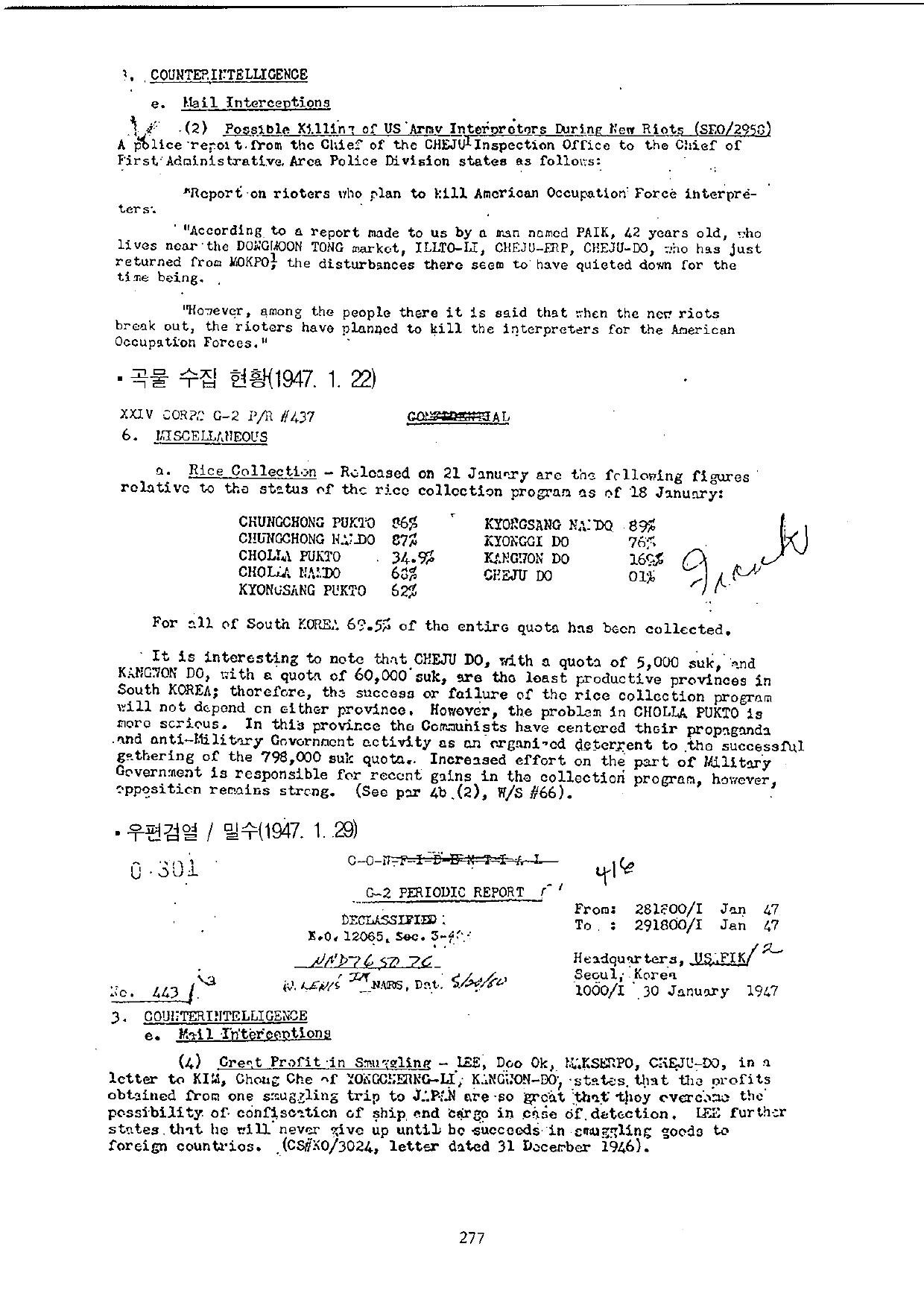
1월 21일 발표된 1월 18일 현재까지의 곡물수집 현황은 다음과 같다.
한국 전체 할당량의 69.5%가 수집되었다.
할당량이 5,000석인 제주도와 6만 석인 강원도는 한국에서 곡물이 가장 적게 생산되는 지역이라는 사실에 주목해야 한다. 그러므로 곡물 수집 계획의 성패가 이 두 지방에 달려 있는 것은 아니다. 그러나 전라북도 문제는 아주 심각하다. 이 지방에서는 공산주의자들이 할당된 79만 8,000석의 곡물수집 계획을 조직적으로 저지하기 위하여 선전과 반군정 활동에 주력해왔다. 최근 군정이 한층 책임감을 갖고 곡물을 수집하고 있지만, 여전히 강한 반발에 부딪치고 있다. (주간보고 제66호 참조)
XXIV CORPS G-2 P/R #437 CONFIDENTIAL
6. MISCELLANEOUS
a. Rice Collection - Released on 21 January are the following figures relative to the status of the rice collection program as of 18 January:
CHUNGCHONG PUKTO 86% KYONGSANG NA DO 89%
CHUNGCHONG NA DO 87% KYONGGI DO 76%
CHOLLA PUKTO 34.9% KANGWON DO 169%
CHOLLA NA DO 63% CHEJU DO 01%
KYONUSANG PUKTO 62%
For all of South KOREA 69.5% of the entire quota has been collected.
It is interesting to note that CHEJU DO, with a quota of 5,000 suk, and KANGWON DO, with a quota of 60,000 suk, are the least productive provinces in South KOREA; therefore, the success or failure of the rice collection program will not depend on either province. However, the problem in CHOLLA PUKTO is more serious. In this province the Communists have centered their propaganda and anti-Military Government activity as an organized deterrent to the successful gathering of the 798,000 suk quota. Increased effort on the part of Military Government is responsible for recent gains in the collection program, however, opposition remains strong. (See par 4b (2), W/S #66).
출처:
제주4·3사건진상규명및희생자명예회복위원회 편,
『제주4·3사건자료집 7』 [미국자료편],
번역문 p.32
/ 원문 p.277 / No. 437.
×
![]()