주한미대사관
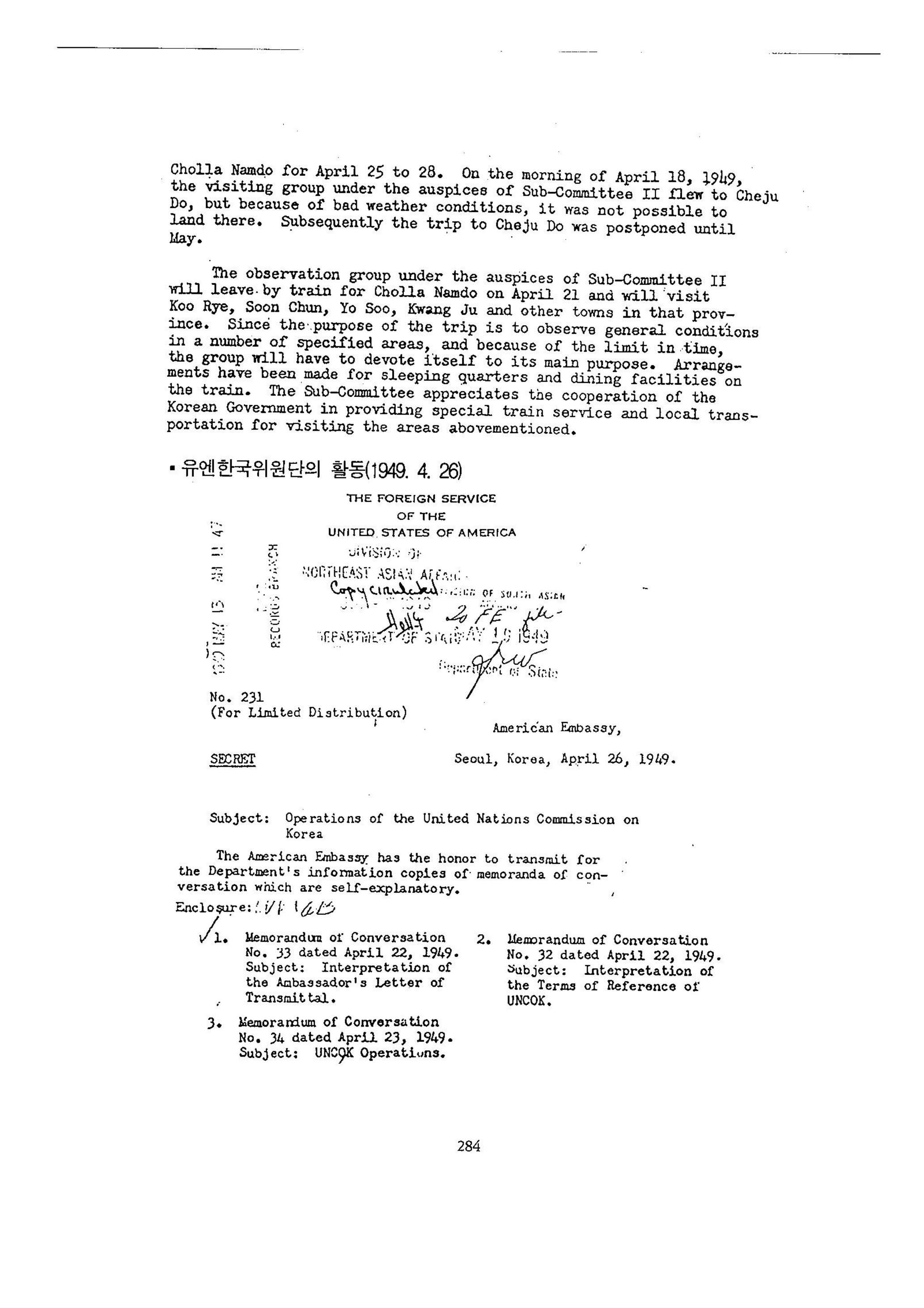
제목: 유엔한국위원단의 활동
미대사관은 국무부 정보용으로 설명체 형식의 대화비망록 사본을 보내게 돼 영광입니다.
첨부문서:
1. 1949년 4월 22일자 대화비망록 제33호, 제목: 대사의 송달서한 번역
2. 1949년 4월 22일자 대화비망록 제32호, 제목: 유엔한국위원단의 참고용 용어 번역
3. 1949년 4월 23일자 대화비망록 제34호, 제목: 유엔한국위원단 활동
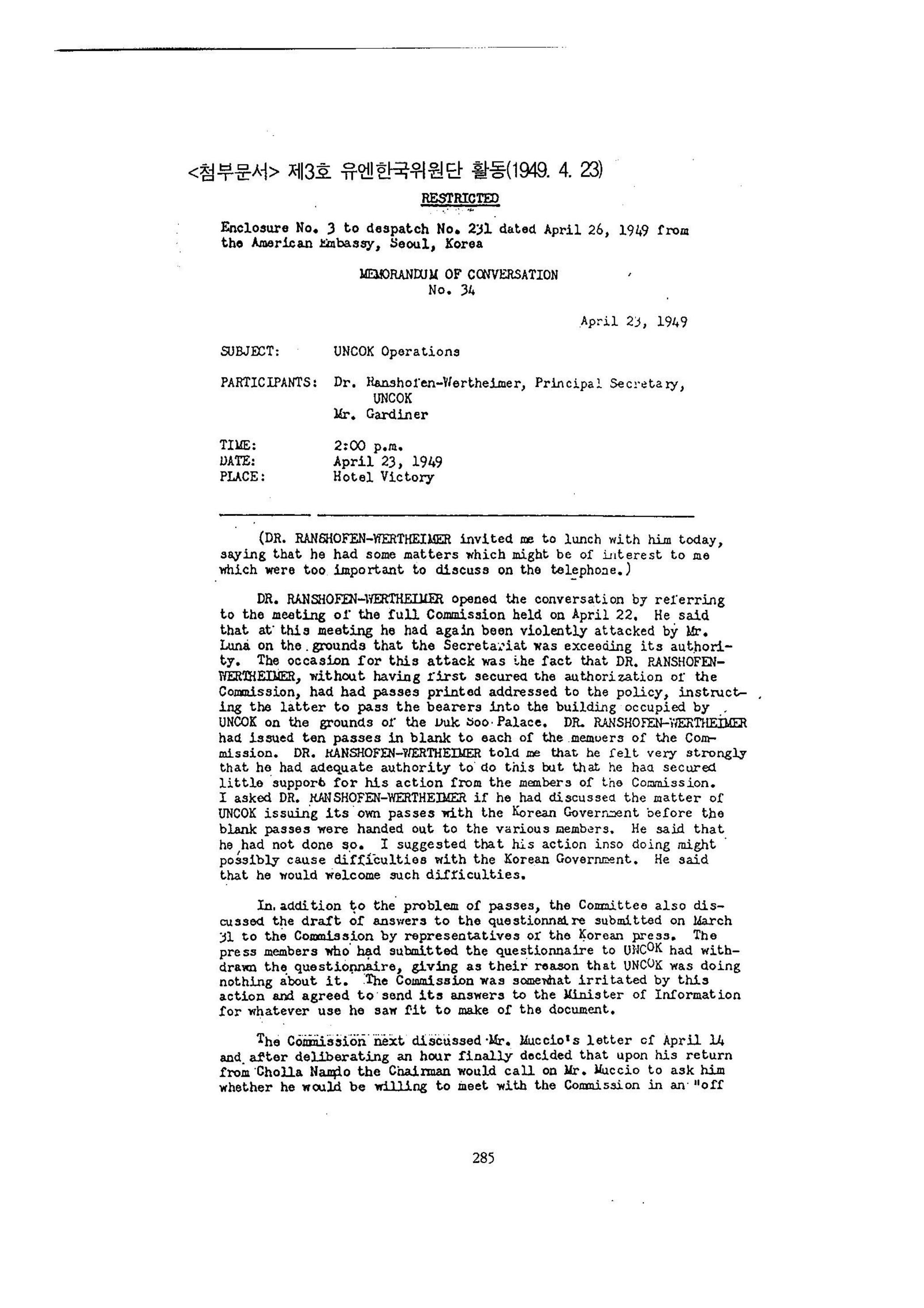
<첨부문서> 제3호: 유엔한국위원단 활동 (1949. 4. 26. 보고)
대화 비망록 제34호
1949년 4월 23일
제목: 유엔한국위원단 활동
참석자: 사무국장 란쇼펜 베르트하이머(Wertheimer) 박사, 가디너(Gardiner)
시간: 오후 2시
일자: 1949년 4월 23일
장소: 빅토리호텔
(란쇼펜 베르트하이머 박사는 전화로 얘기하기에는 너무 중요한 것으로 본인이 흥미를 가질만한 몇몇 사항이 있다면서 오늘 오찬에 본인을 초청했습니다.)
란쇼펜 베르트하이머 박사는 4월 22일 열린 전체 위원단 모임에 대해 언급하면서 대화 말문을 먼저 열었습니다. 그는 이날 모임에서 다시 사무국장이 월권하고 있다는 이유로 루나(R. Luna) 박사로부터 또다시 심하게 질책받았다고 말했습니다. 이 질책사건은 란쇼펜 베르트하이머 박사가 먼저 위원단의 승인을 받지 않은 채 덕수궁 자리에 있는 유엔한국위원단이 있는 건물 안에 심부름꾼들이 들어갈 수 있도록 정책과 훈령이 있는 통행증을 인쇄했다는 것입니다. 란쇼펜 베르트하이머 박사는 위원단 위원들 개개인에게 무기명 통행증 10장씩을 발부했습니다. 그는 본인에게 이 일을 하기에 충분한 권한이 있지만 위원단 위원들로부터 자신의 조처에 대해 거의 지지를 얻지 못했다는 것을 강하게 느꼈다고 말했습니다. 본인은 란쇼펜 베르트하이머 박사에게 유엔한국위원단 통행증 발행에 관한 사무를 한국정부와 논의했는지 물었습니다. 그는 그렇게 하지 않았다고 답변했습니다. 본인은 그의 행동이 아마도 한국정부와의 마찰을 일으킬 수 있다고 말하자 그는 그와 같은 어려움을 환영할 것이라고 말했습니다.
통행증 문제에 덧붙여 위원단은 또 한국 언론의 대표자들이 3월 31일 위원단에 제출한 질의에 대한 답변초안을 논의했습니다. 유엔한국위원단에 질의서를 제출했었던 한국언론 대표들은 유엔한국위원단이 아무것도 하지 않았다는 이유를 들어 질의서를 철회했습니다. 위원단은 이 행동으로 다소 초조했으며 서류를 만들만한 것으로 보이는 모든 것을 공보처장관에게 답변으로 보내는데 동의했습니다.
위원단은 다음 4월 14일의 무쵸(Muccio) 서한을 논의했습니다. 1시간 동안 심사숙고한 끝에 마침내 의장은 전라남도에서 귀환하자마자 무쵸에게 전화를 걸어 ‘협의’ 문제를 논의하기 위해 ‘비보도’(非報道)를 전제로 한 회의를 위원단과 할 의향이 있는지 물었습니다. 루나의 고집으로 그가 있게 될 다음 2주내에 회의를 열 것을 희망했습니다. 루나가 5월 9일 전에 돌아오지 못할 것이라는 견해와 5월 10일 선거감시를 목적으로 한 위원단의 계획된 제주도 여행 때문에 계획된 회의는 5월 중순 이전에 열릴 것 같지는 않습니다.
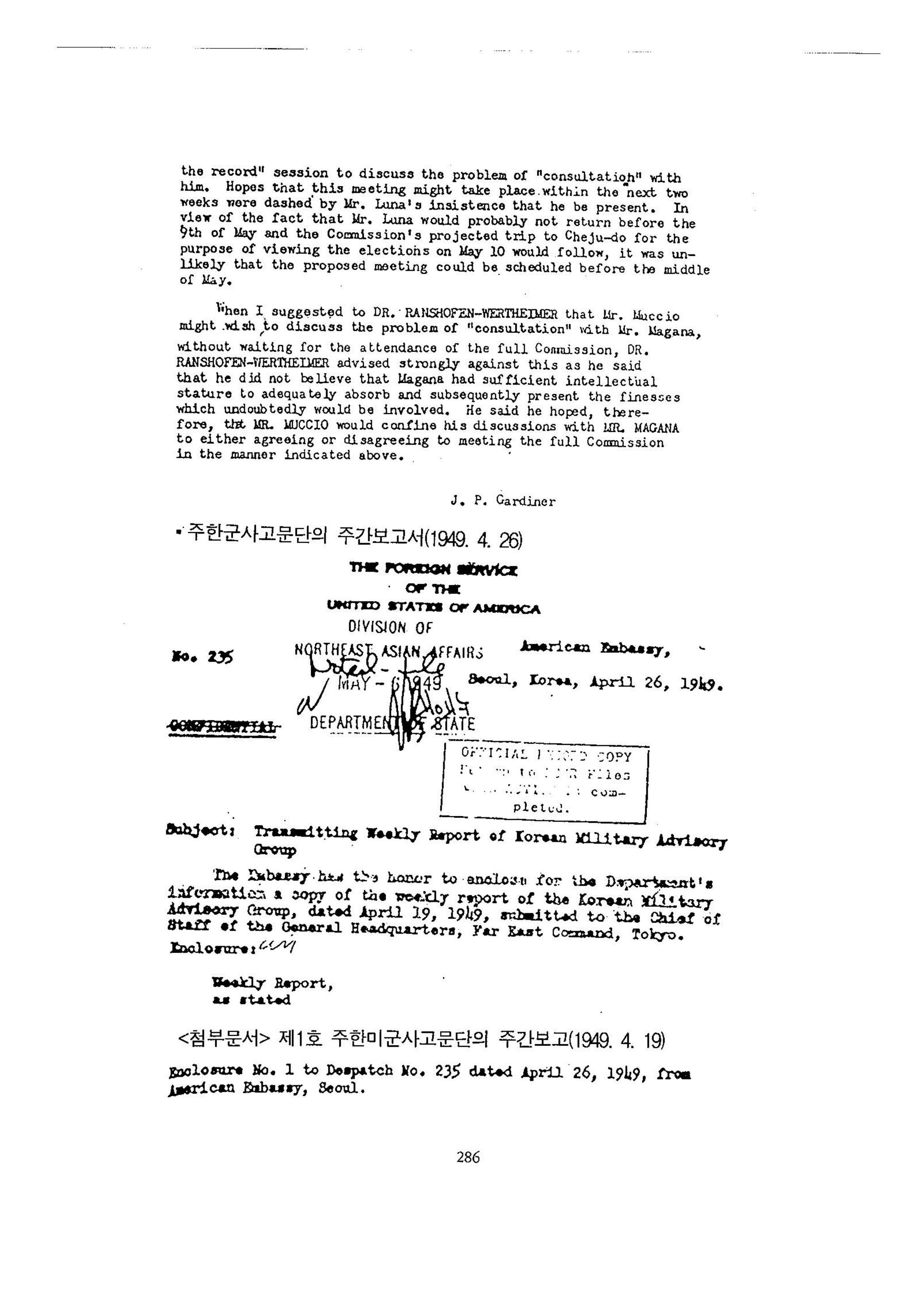
본인은 란쇼펜 베르트하이머 박사에게 무쵸가 전체 위원단의 참석을 기다리지 않고 마가나(Magana)와 ‘협의’ 문제를 논의하고 싶어한다고 말을 꺼냈습니다. 란쇼펜 베르타하이머 박사는 마가나가 확실히 포함될 정확성을 충분하게 소화하고 보여줄 충분한 지적 능력이 없는 것으로 생각한다고 말하면서 이 계획에 대해 강력하게 충고했다. 그러므로 그는 무쵸가 위에 지적된 방법으로 전체 위원단과의 회의를 동의하든 하지 않든 마가나와의 논의를 제한하기를 희망한다고 말했다.
가디너(Gardiner)
THE FOREIGN SERVICE
OF THE
UNITED STATES OF AMERICA
DIVISION OF
NORTHEAST ASIAN AFFAIRS
Copy circulated [illegible] OF SOUTH ASIA
[illegible] 2 FE [illegible]
DEPARTMENT OF STATE [illegible] 1949
[illegible] of State
No. 231
(For Limited Distribution)
American Embassy,
SECRET
Seoul, Korea, April 26, 1949.
Subject: Operations of the United Nations Commission on Korea
The American Embassy has the honor to transmit for the Department's information copies of memoranda of conversation which are self-explanatory.
Enclosure: 1/F 1&3
√1. Memorandum of Conversation No. 33 dated April 22, 1949. Subject: Interpretation of the Ambassador's Letter of Transmittal.
2. Memorandum of Conversation No. 32 dated April 22, 1949. Subject: Interpretation of the Terms of Reference of UNCOK.
3. Memorandum of Conversation No. 34 dated April 23, 1949. Subject: UNCOK Operations.
<첨부문서> 제3호 유엔한국위원단 활동(1949. 4. 23)
RESTRICTED
Enclosure No. 3 to despatch No. 231 dated April 26, 1949 from the American Embassy, Seoul, Korea
MEMORANDUM OF CONVERSATION
No. 34
April 23, 1949
SUBJECT: UNCOK Operations
PARTICIPANTS: Dr. Ranshofen-Wertheimer, Principal Secretary,
UNCOK
Mr. Gardiner
TIME: 2:00 p.m.
DATE: April 23, 1949
PLACE: Hotel Victory
(DR. RANSHOFEN-WERTHEIMER invited me to lunch with him today, saying that he had some matters which might be of interest to me which were too important to discuss on the telephone.)
DR. RANSHOFEN-WERTHEIMER opened the conversation by referring to the meeting of the full Commission held on April 22. He said that at this meeting he had again been violently attacked by Mr. Luna on the grounds that the Secretariat was exceeding its authority. The occasion for this attack was the fact that DR. RANSHOFEN-WERTHEIMER, without having first secured the authorization of the Commission, had had passes printed addressed to the policy, instructing the latter to pass the bearers into the building occupied by UNCOK on the grounds of the Duk Soo Palace. DR. RANSHOFEN-WERTHEIMER had issued ten passes in blank to each of the members of the Commission. DR. RANSHOFEN-WERTHEIMER told me that he felt very strongly that he had adequate authority to do this but that he had secured little support for his action from the members of the Commission. I asked DR. RANSHOFEN-WERTHEIMER if he had discussed the matter of UNCOK issuing its own passes with the Korean Government before the blank passes were handed out to the various members. He said that he had not done so. I suggested that his action inso doing might possibly cause difficulties with the Korean Government. He said that he would welcome such difficulties.
In addition to the problem of passes, the Committee also discussed the draft of answers to the questionnaire submitted on March 31 to the Commission by representatives of the Korean press. The press members who had submitted the questionnaire to UNCOK had withdrawn the questionnaire, giving as their reason that UNCOK was doing nothing about it. The Commission was somewhat irritated by this action and agreed to send its answers to the Minister of Information for whatever use he saw fit to make of the document.
The Commission next discussed Mr. Muccio's letter of April 14 and after deliberating an hour finally decided that upon his return from Cholla Namdo the Chairman would call on Mr. Muccio to ask him whether he would be willing to meet with the Commission in an "off
the record" session to discuss the problem of "consultation" with him. Hopes that this meeting might take place within the next two weeks were dashed by Mr. Luna's insistence that he be present. In view of the fact that Mr. Luna would probably not return before the 9th of May and the Commission's projected trip to Cheju-do for the purpose of viewing the elections on May 10 would follow, it was unlikely that the proposed meeting could be scheduled before the middle of May.
When I suggested to DR. RANSHOFEN-WERTHEIMER that Mr. Muccio might wish to discuss the problem of "consultation" with Mr. Magana, without waiting for the attendance of the full Commission, DR. RANSHOFEN-WERTHEIMER advised strongly against this as he said that he did not believe that Magana had sufficient intellectual stature to adequately absorb and subsequently present the finesses which undoubtedly would be involved. He said he hoped, therefore, that MR. MUCCIO would confine his discussions with MR. MAGANA to either agreeing or disagreeing to meeting the full Commission in the manner indicated above.
J. P. Gardiner
출처:
제주4·3사건진상규명및희생자명예회복위원회 편,
『제주4·3사건자료집 11』 [미국자료편],
번역문 p.93
/ 원문 p.284–286.
×
![]()