주한미사절단
제목: 1948년 12월의 정치요약
존경하는 국무장관 귀하
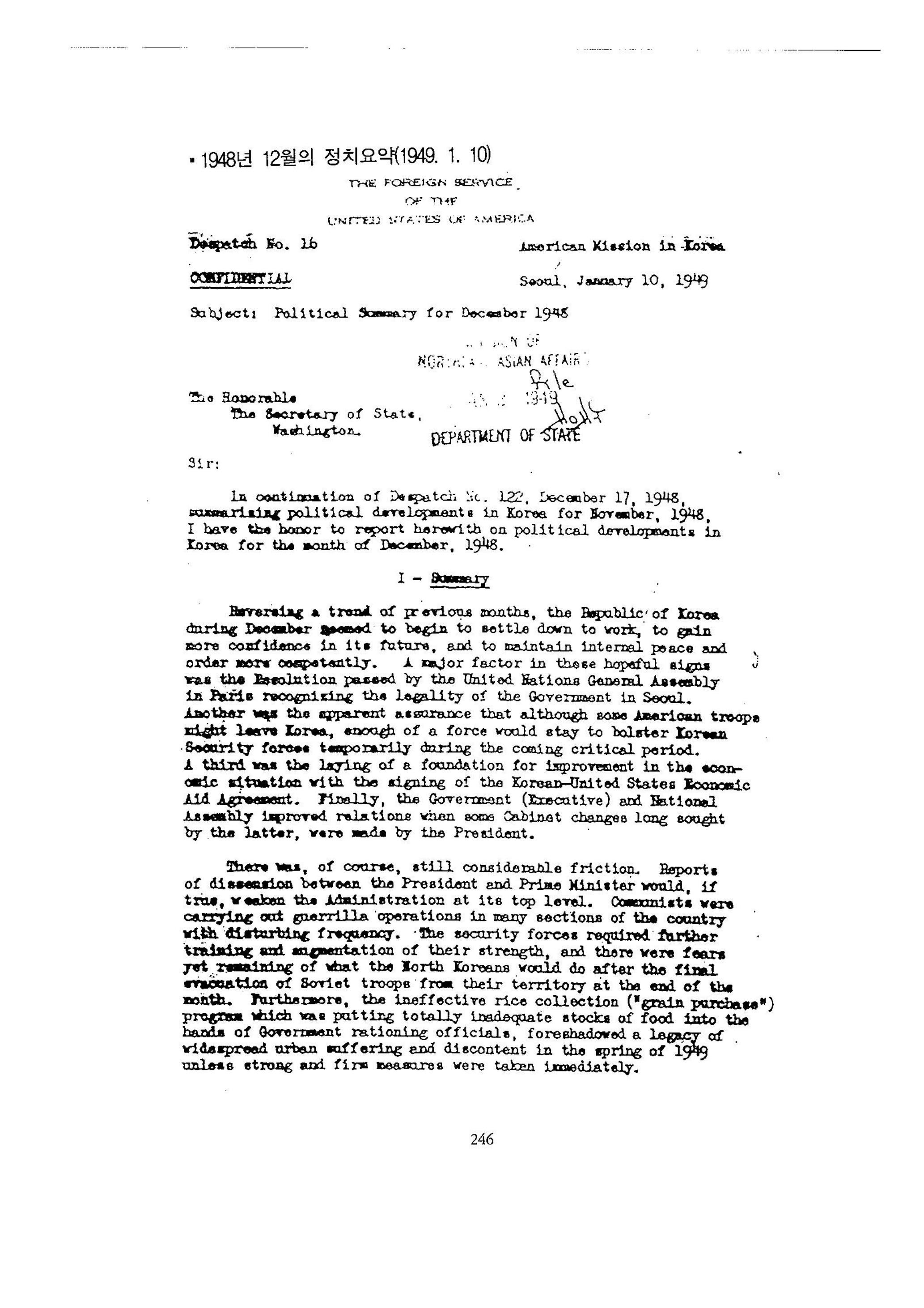
1948년 11월의 한국의 정치 발전상황을 요약한 1948년 12월 17일자 <급송문서> 제122호에 계속해 여기 1948년 12월 한국의 정치 발전상황을 보고하게 돼 영광입니다.
I. 개요
이전의 추세와는 반대로 12월의 대한민국은 국가의 미래에 대해 더욱 확신을 얻고 문제를 해결하기 시작했으며 국내 평화와 질서를 더욱 확실히 유지하기 시작한 것으로 보입니다. 이들 희망섞인 조짐의 주요 요인은 서울 정부의 정통성을 승인한 파리의 유엔총회에서 통과된 결의안입니다. 또 다른 요인은 일부 미군부대가 한국에서 철수할지라도 충분한 병력이 향후 중요한 시기에 일시적으로 한국 방위군을 강화시키기 위해 잔류할 것이라는 확신입니다.
세 번째 요인은 한미경제원조협정에 서명함으로써 경제상황의 발전을 위한 토대를 놓았다는데 있습니다. 마지막요인으로 정부(행정부)와 국회가 관계를 개선했다는 것입니다. 국회는 대통령이 임명한 일부 각료들의 교체를 오랫동안 요구해왔습니다.
물론 아직도 상당한 마찰이 있습니다. 대통령과 국무총리 사이의 의견충돌에 대한 보고서가, 사실이라면, 최고위층에서의 행정부를 약화시킬 것입니다.
공산주의자들은 빈번하게 소요를 일으키면서 한국의 여러 지방에서 게릴라작전을 펼치고 있습니다. 방위군은 더 많은 훈련과 군사력 증원을 요구하고 있으며 북한이 자신들의 영토에서 이 달말 소련군이 최종 철수한 뒤 무엇을 할 것인지에 대한 두려움이 방위군에게 아직도 남아있습니다.
더욱이 아주 불충분한 식량저장을 정부 배급관리들의 손에 넘기는 비효율적인 미곡수집(‘곡물매입’)계획은 강력하고 단호한 조처가 즉각적으로 취해지지 않으면 1949년 봄에 퍼질 도시민들의 고통과 불평에 대한 유산의 전조가 될 것입니다.
II. 남한의 소요
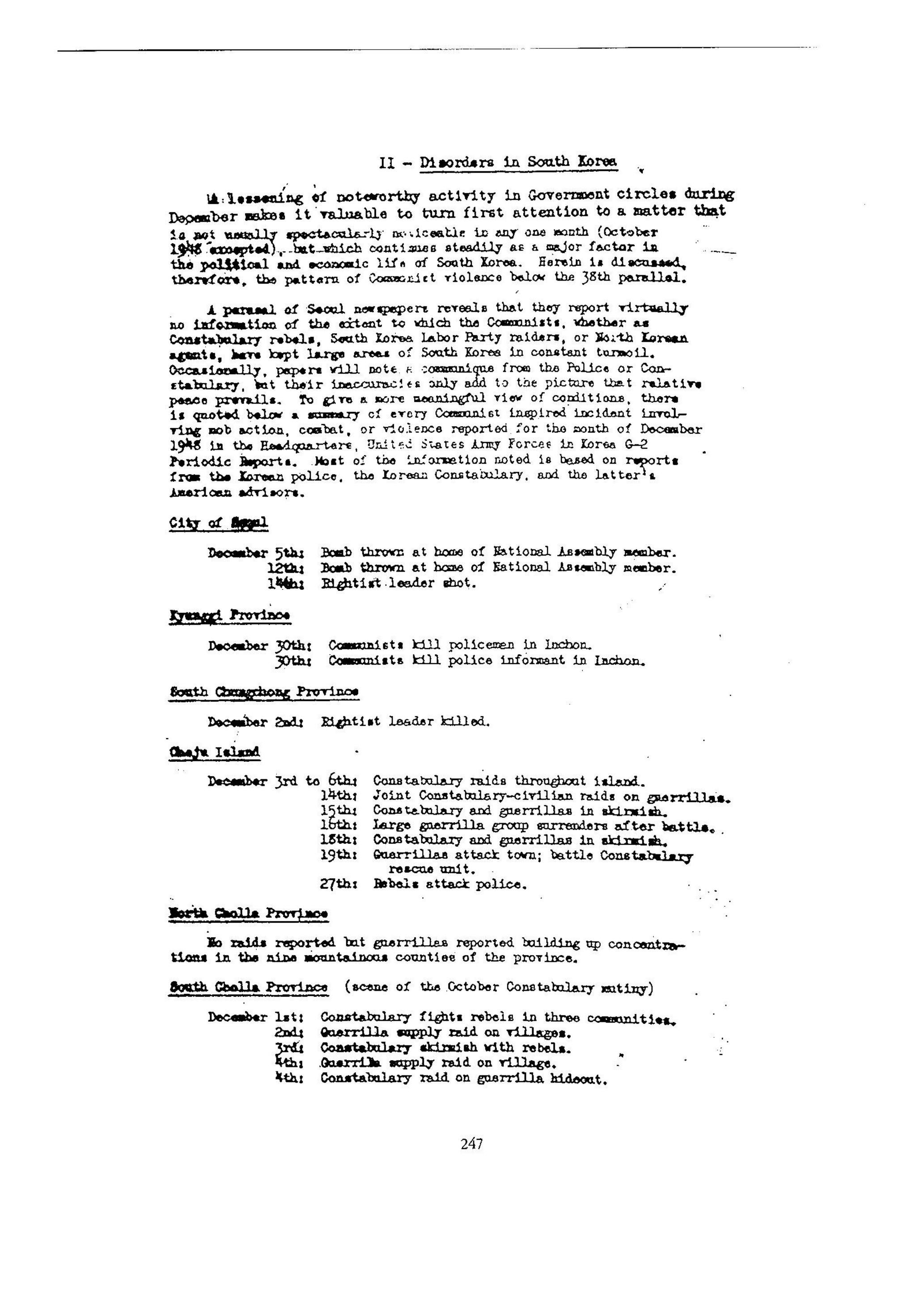
12월에 정부내에서의 주목할 만한 활동의 감소는 한 1개월(1948년 10월에 기대한 것처럼)에 걸쳐 일어난 특기할 만한 수준은 아니라고 여겨지지만 한국내에서 정치, 경제적인 생활의 주요 요소로서 지속적으로 작용할 것입니다.
그러므로 여기 38선 이남 공산주의자들의 폭력행위의 유형이 설명됐습니다.
한국의 신문들을 정독하다보면 이들 신문들은 사실 국방경비대 반란군으로서, 남로당의 습격자로서, 북한 간첩으로서든지 간에 어느 정도 공산주의자들이 남한의 많은 지역을 끊임없는 혼란에 빠뜨리고 있다는 정보를 보도하지 않고 있습니다.
때때로 신문들은 경찰이나 국방경비대의 성명서 발표를 주목하지만 그들의 부정확성은 단지 비교적 평화가 오고 있다는 이야기만 덧붙이고 있습니다.
상황에 대한 좀더 의미있는 견해를 주기 위해 주한미육군사령부 정보참모부 일일정보보고의 1948년 12월에 보고된 폭도행위, 전투, 폭력행위를 포함한 공산주의자들이 선동한 모든 사건에 대한 요약을 아래 인용했습니다.
주목되는 대부분의 정보는 한국 경찰과 국방경비대, 그리고 국방경비대의 미군 고문관들로부터 받은 보고서에 근거합니다.
서울시
12월 5일: 국회의원 자택에 폭탄 투척
12일: 국회의원 자택에 폭탄 투척
14일: 우익지도자 총격
경기도
12월 30일: 공산주의자가 인천에서 경찰관 살해
30일: 공산주의자가 인천에서 경찰 정보원 살해
충청남도
12월 2일: 우익지도자 피살
제주도
12월 3~6일: 경비대 제주도 전역에서 급습
14일: 군민합동 게릴라 급습
15일: 경비대와 게릴라 소규모 교전
16일: 대규모 게릴라 부대 전투 뒤 투항
18일: 경비대와 게릴라 소규모 교전
19일: 게릴라 마을 공격, 경비대 구조팀과 교전
27일: 폭도 경찰 공격
전라북도
습격이 보고되지 않았으나 게릴라들이 전라북도내 9개 산악지역의 군(郡)에서 증강하고 있다고 보고됨
전라남도(10월 국방경비대 반란 지역)
12월 1일: 국방경비대 3개 마을에서 반란군과 교전
2일: 게릴라 마을 보급습격
3일: 국방경비대 반란군과 소규모 교전
4일: 게릴라 마을 보급습격
4일: 국방경비대 게릴라 은신처 급습
(중략)
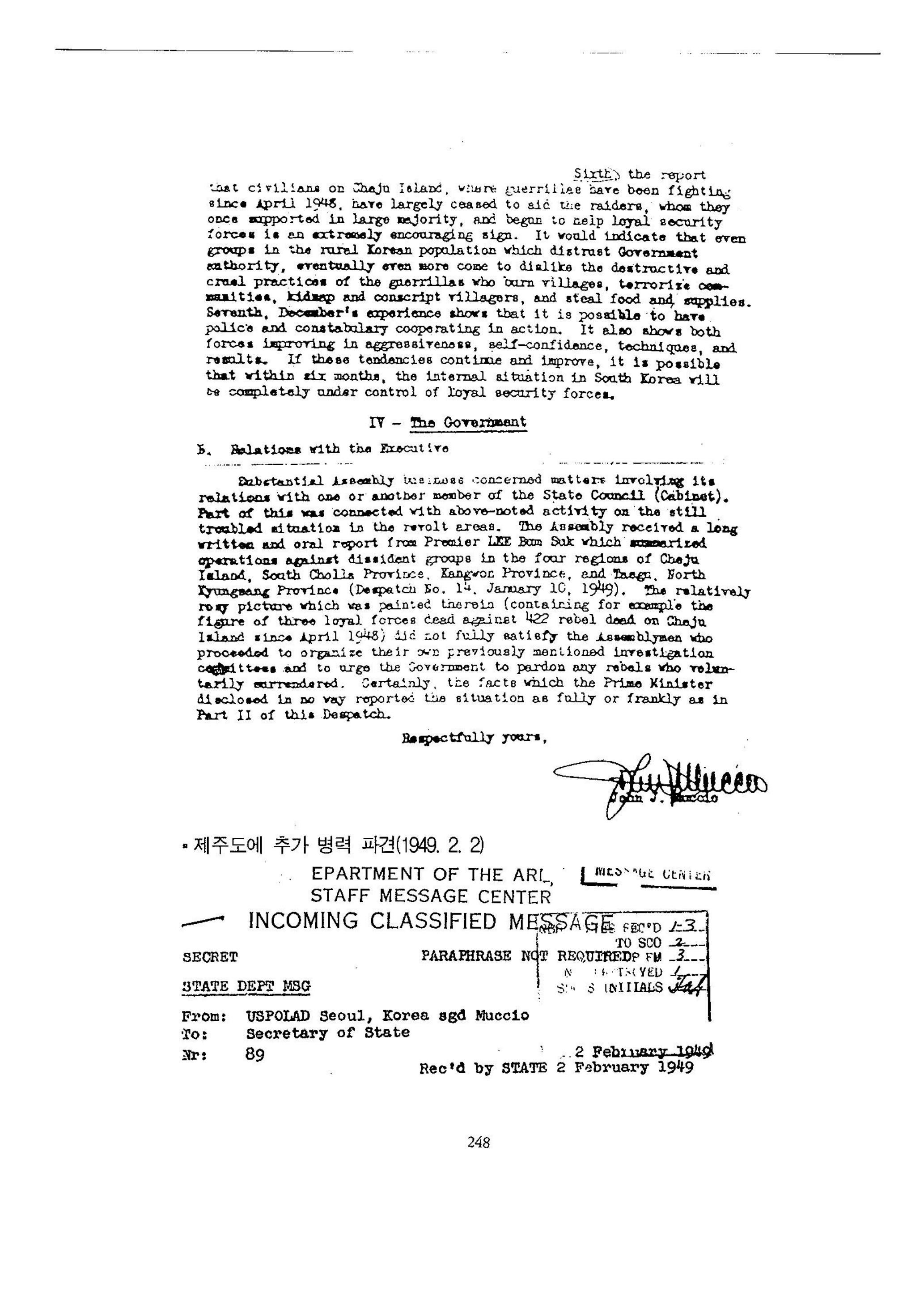
여섯 번째, 1948년 4월 이후 게릴라들이 전투를 벌여온 제주도의 민간인들이 한때 상당수가 지지했던 습격자들에 대한 협조를 중단하고 토벌대를 지원하기 시작했다는 보고서는 지극히 고무적인 징조입니다. 이것은 정부의 권위를 불신하는 농촌주민들이 마을을 방화하고 공동체를 테러하며 마을주민들을 납치하거나 강제로 끌고 가는가 하면 식량과 보급품을 훔치는 게릴라들의 파괴적이고 잔인한 수법을 마침내 더욱 싫어하게 된 것입니다.
일곱 번째, 12월의 경험은 경찰과 국방경비대가 작전을 하면서 서로 협조할 수 있다는 가능성을 보여줍니다. 이것은 또한 경찰과 국방경비대가 공격과 자신감, 기술, 전과를 향상시키고 있다는 것을 보여줍니다. 이런 경향들이 점점 개선된다면 6개월 이내에 남한의 국내 상황은 진압군의 완전한 통제하에 있을 가능성이 있습니다.
(중략)
III. 정부
행정부와의 관계
실질적인 국회의 업무는 국무위원 1~2명과 관련한 일에 집중됐습니다. 업무중 일부분은 반란지역에서 여전히 문제상황에 대한 위에 언급된 활동과 관련됐습니다. 국회는 이범석 국무총리로부터 제주도, 전라남도, 강원도, 경상북도 대구 등 4개 지역의 반도 도당들에 대하여 취한 공세를 요약한 장문의 보고서와 구두보고를 받았습니다(<급송문서> 제14호, 1949년 1월 10일).
제주도에 대해 설명한 낙관적인 견해(1948년 4월 이후 진압군쪽 3명이 사망하고, 반란군 422명이 사망한 사례를 포함)는 국회가 이전에 언급한 국회 조사위원회를 조직하고 자발적으로 투항한 반란군은 누구든지 사면하도록 정부에 촉구하려는 국회의원들을 만족시키지 못했습니다.
확실히 국무총리가 발표한 보고서는 이 <급송문서>의 제2부(남한의 소요: 역주)에서처럼 결코 충분하거나 솔직한 상황보고서가 아닙니다.
(후략)
존 무쵸(John J. Muccio)
THE FOREIGN SERVICE
OF THE
UNITED STATES OF AMERICA
Despatch No. 1b
American Mission in Korea
CONFIDENTIAL
Seoul, January 10, 1949
Subject: Political Summary for December 1948
NORTHERN ASIAN AFFAIRS
The Honorable
The Secretary of State,
Washington.
DEPARTMENT OF STATE
Sir:
In continuation of Despatch No. 122, December 17, 1948, summarizing political developments in Korea for November, 1948, I have the honor to report herewith on political developments in Korea for the month of December, 1948.
I - Summary
Reversing a trend of previous months, the Republic of Korea during December seemed to begin to settle down to work, to gain more confidence in its future, and to maintain internal peace and order more competently. A major factor in these hopeful signs was the Resolution passed by the United Nations General Assembly in Paris recognizing the legality of the Government in Seoul. Another was the apparent assurance that although some American troops might leave Korea, enough of a force would stay to bolster Korean Security forces temporarily during the coming critical period. A third was the laying of a foundation for improvement in the economic situation with the signing of the Korean-United States Economic Aid Agreement. Finally, the Government (Executive) and National Assembly improved relations when some Cabinet changes long sought by the latter, were made by the President.
There was, of course, still considerable friction. Reports of dissension between the President and Prime Minister would, if true, weaken the Administration at its top level. Communists were carrying out guerrilla operations in many sections of the country with disturbing frequency. The security forces required further training and augmentation of their strength, and there were fears yet remaining of what the North Koreans would do after the final evacuation of Soviet troops from their territory at the end of the month. Furthermore, the ineffective rice collection ("grain purchase") program which was putting totally inadequate stocks of food into the hands of Government rationing officials, foreshadowed a legacy of widespread urban suffering and discontent in the spring of 1949 unless strong and firm measures were taken immediately.
--- p257 ---
II - Disorders in South Korea
A lessening of noteworthy activity in Government circles during December makes it valuable to turn first attention to a matter that is not usually spectacularly noticeable in any one month (October 1948 excepted), but which continues steadily as a major factor in the political and economic life of South Korea. Herein is discussed, therefore, the pattern of Communist violence below the 38th parallel.
A perusal of Seoul newspapers reveals that they report virtually no information of the extent to which the Communists, whether as Constabulary rebels, South Korea Labor Party raiders, or North Korean agents, have kept large areas of South Korea in constant turmoil. Occasionally, papers will note a communique from the Police or Constabulary, but their inaccuracies only add to the picture that relative peace prevails. To give a more meaningful view of conditions, there is quoted below a summary of every Communist inspired incident involving mob action, combat, or violence reported for the month of December 1948 in the Headquarters, United States Army Forces in Korea G-2 Periodic Reports. Most of the information noted is based on reports from the Korean police, the Korean Constabulary, and the latter's American advisors.
City of Seoul
December 5th: Bomb thrown at home of National Assembly member.
12th: Bomb thrown at home of National Assembly member.
14th: Rightist leader shot.
Kyunggi Province
December 30th: Communists kill policemen in Inchon.
30th: Communists kill police informant in Inchon.
South Chungchong Province
December 2nd: Rightist leader killed.
Cheju Island
December 3rd to 6th: Constabulary raids throughout island.
14th: Joint Constabulary-civilian raids on guerrillas.
15th: Constabulary and guerrillas in skirmish.
16th: Large guerrilla group surrenders after battle.
18th: Constabulary and guerrillas in skirmish.
19th: Guerrillas attack town; battle Constabulary rescue unit.
27th: Rebels attack police.
North Cholla Province
No raids reported but guerrillas reported building up concentrations in the nine mountainous counties of the province.
South Cholla Province (scene of the October Constabulary mutiny)
December 1st: Constabulary fights rebels in three communities.
2nd: Guerrilla supply raid on villages.
3rd: Constabulary skirmish with rebels.
4th: Guerrilla supply raid on village.
4th: Constabulary raid on guerrilla hideout.
--- p258 ---
Sixth the report that civilians on Chaju Island, where guerrillas have been fighting since April 1948, have largely ceased to aid the raiders, whom they once supported in large majority, and begun to help loyal security forces is an extremely encouraging sign. It would indicate that even groups in the rural Korean population which distrust Government authority, eventually even more come to dislike the destructive and cruel practices of the guerrillas who burn villages, terrorize communities, kidnap and conscript villagers, and steal food and supplies. Seventh, December's experience shows that it is possible to have police and constabulary cooperating in action. It also shows both forces improving in aggressiveness, self-confidence, techniques, and results. If these tendencies continue and improve, it is possible that within six months, the internal situation in South Korea will be completely under control of loyal security forces.
IV - The Government
5. Relations with the Executive
Substantial Assembly business concerned matters involving its relations with one or another member of the State Council (Cabinet). Part of this was connected with above-noted activity on the still troubled situation in the revolt areas. The Assembly received a long written and oral report from Premier LEE Bum Suk which summarized operations against dissident groups in the four regions of Chaju Island, South Cholla Province, Kangwon Province, and Taegu, North Kyungsang Province (Despatch No. 14, January 10, 1949). The relatively rosy picture which was painted therein (containing for example the figure of three loyal forces dead against 422 rebel dead on Chaju Island since April 1948) did not fully satisfy the Assemblymen who proceeded to organize their own previously mentioned investigation committees and to urge the Government to pardon any rebels who voluntarily surrendered. Certainly, the facts which the Prime Minister disclosed in no way reported the situation as fully or frankly as in Part II of this Despatch.
Respectfully yours,
John J. Muccio
출처:
제주4·3사건진상규명및희생자명예회복위원회 편,
『제주4·3사건자료집 11』 [미국자료편],
번역문 p.50
/ 원문 p.246–248.
×
![]()